

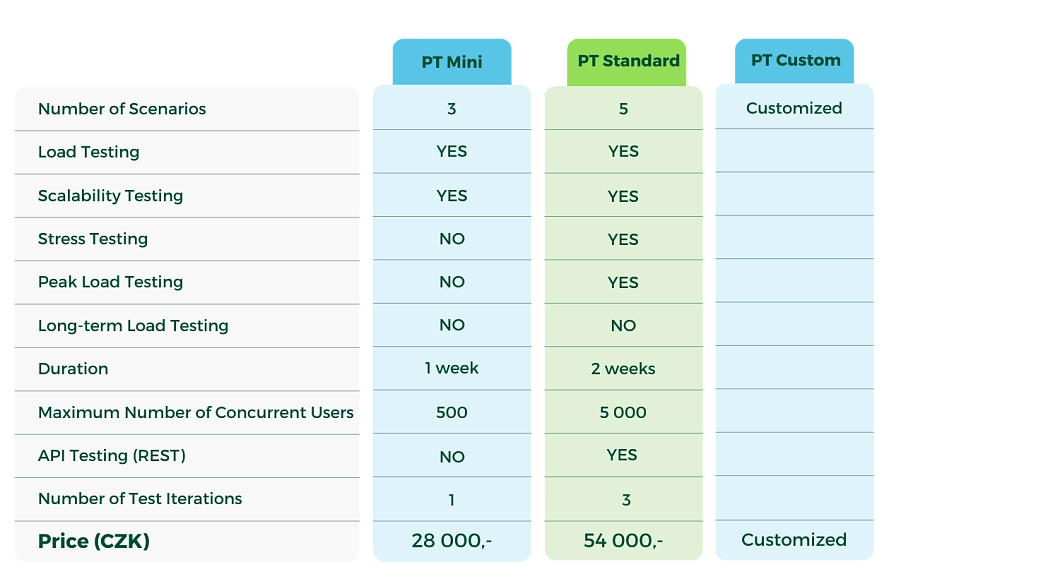
Explanation of the rows:
- Number of scenarios – the number of unique scenarios that simulate real user activity, for example arrival on the homepage, Contact page, submission of a contact form.
- Load testing – evaluates system behavior under typical expected load.
- Stress testing – evaluates system behavior under extreme load, for example the maximum expected load of an e-shop during the Black Friday period.
- Peak load testing – evaluates the system’s response to sudden load spikes.
- Long-term load testing – evaluates system behavior under typical expected load in a long-running test, the test lasts at least one day.
- Duration – the duration of the project from initial analysis to delivery of results, excluding waiting time for customer cooperation.
- Number of generator locations – the number of locations from which the load will be generated.
- Maximum number of concurrent users – the maximum load that will be generated against the target server during the test.
- API testing – whether the scenarios may include simulated behavior of a technical user working with a technical API, limited to REST APIs.
- Number of test iterations – how many times the test cycle will be repeated in case of fixes or optimizations on the tested system side.